
Everyday Infrastructures: an exhibition of the interventions that improve city life
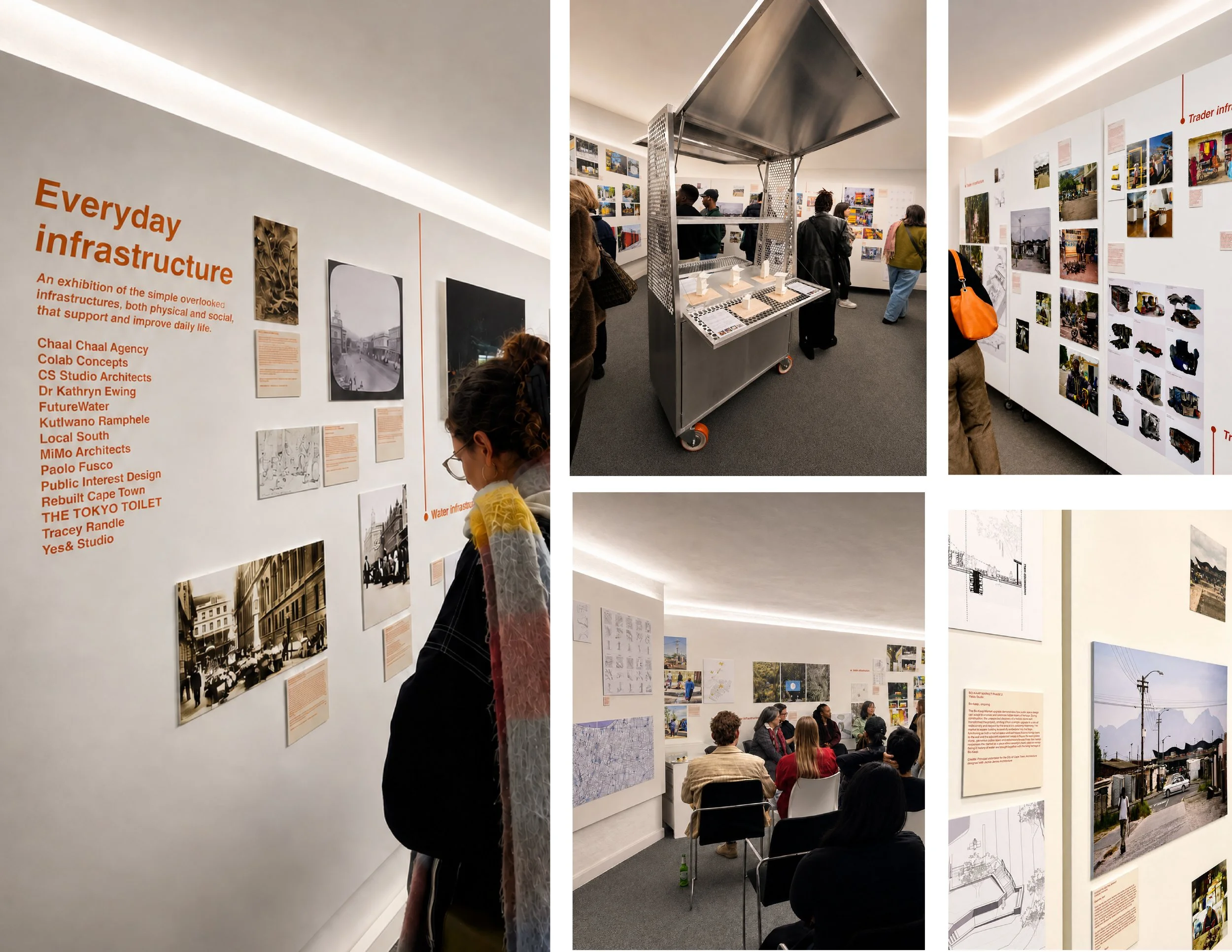
This August, during Women's Month, Yes& Studio presented Everyday Infrastructures at CIfA's The Architect Gallery in Cape Town. The exhibition brought together practitioners, researchers and designers to consider the small but consequential interventions that support and improve daily urban life.
Presented from 5–29 August 2026, the exhibition focused on the ordinary spaces, objects and systems that people rely on every day. At its centre was the relationship between public space and infrastructure. Markets, water points, trading environments, toilets, mobility facilities and safe public places were not treated as peripheral amenities. They were presented as civic structures , infrastructure that makes urban life more dignified, resilient and generous.
This connected directly to the 2026 Women's Month theme, Building Resilient Economies for All, and to the spatial conditions that let everyday economies function. Curated by the team at Yes& Studio, the exhibition assembled a wide range of local and international perspectives. Contributors included:
Chaal Chaal Agency,
Colab Concepts,
CS Studio Architects,
Dr Kathryn Ewing,
FutureWater,
Kutlwano Ramphele,
Local South,
MiMo Architects,
Paolo Fusco,
Public Interest Design,
Rebuilt Cape Town;
Tracey Randle,
THE TOKYO TOILET
and selected projects from Yes& Studio.
Everyday Infrastructures was an invitation to look more carefully at the things that make a city work: places to trade, collect water, wait, move, gather and rest,These are often modest interventions, but they shape whether the city feels accessible, supportive and capable of sustaining everyday life.
As the team behind the exhibition, Yes& Studio thanks CIfA's The Architect Gallery for hosting Everyday Infrastructures. Thank you to every contributor and exhibitor who shared their research, projects and perspectives, from South Africa to India to Italy to Japan. And thank you to the many visitors who took the time to look closely at the systems that quietly hold up daily life. None of this would have been possible without that collective generosity.
The exhibition has closed, but its questions remain open. How does small-scale, everyday infrastructure get funded and maintained once a pilot phase ends, not just designed and built? How are the people who use and often informally manage these spaces brought into decision making, rather than consulted afterwards? How can projects that work at one site be adapted and resourced at city scale, without losing what made them responsive in the first place? And how is safety, dignity and gender designed into public space from the outset, rather than added as an afterthought? Everyday Infrastructures does not answer these questions. It insists they belong at the centre of how Cape Town, and cities like it, plan for the future.